




An approach to a theory of quantum gravity
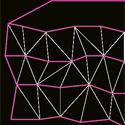

At large distances, Einstein’s theory of general relativity describes gravitational physics remarkably well. However, attempts at defining quantum gravity at arbitrarily short distances based on the Einstein-Hilbert action of general relativity fail.
In two papers appearing in Physical Review Letters and Physical Review D, Petr Hořava of the University of California, Berkeley, in the US suggests a novel solution to finding a quantum theory of gravity that is renormalizable. The novelty of Hořava’s approach lies in temporarily abandoning the symmetries that are the cornerstone of general relativity: invariance under general space-time coordinate transformations. Hořava proposes a carefully constructed theory that treats time and space differently but has the virtue of short distance behavior compatible with renormalizability.
But how is this theory related to Einstein’s general relativity—our well-tested theory of gravity? According to Hořava, general relativity arises in the infrared (long distance) limit of his theory where the familiar properties and symmetries of general relativity emerge. – Ansar Fayyazuddin