




Granular Matter Carries Hidden Memory
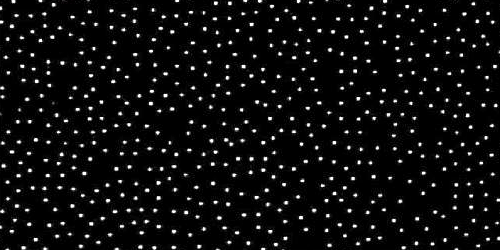

A physical system can carry traces of its past, with its previous states leaving a “memory” that shapes its future evolution. One striking example is the Kovacs effect, which causes a glassy or disordered system to unexpectedly move away from its final state before settling into it. The standard Kovacs effect occurs in systems relaxing toward equilibrium, while an “anomalous” effect exists for systems driven out of equilibrium. Granular matter offers an accessible way to explore these phenomena, but direct evidence of memory in such matter has been scarce. Now Francisco Vega Reyes at the University of Extremadura in Spain and his colleagues have achieved the first observation of the anomalous Kovacs effect in a granular system [1].
The researchers placed a layer of millimeter-sized steel spheres between an aluminum plate and a plastic lid. They vibrated the system vertically at a constant intensity, which caused the spheres to have a stable temperature (average kinetic energy). They then abruptly reduced the shaking intensity, making the temperature relax toward a final value. Lastly, before that value was reached, the team abruptly increased the shaking intensity such that the new final temperature matched the current temperature.
Without memory effects, the system would simply stay at that current temperature. Instead, it continued cooling, as if it remembered the previous relaxation process—a hallmark of the anomalous Kovacs effect. The system then quickly lost that memory and headed toward its final state. The researchers developed a kinetic-theory framework to explain this anomalous Kovacs effect, and they performed molecular-dynamics simulations to verify their findings. Their analysis suggests that memory is not just a curious property of specific systems but a fundamental, widespread phenomenon in nonequilibrium physics.
–Ryan Wilkinson
Ryan Wilkinson is a Corresponding Editor for Physics Magazine based in Durham, UK.
References
- F. Vega Reyes et al., “Kovacs memory effect in a thin granular layer: Experimental evidence and its physical origin,” Phys. Rev. Lett. 137, 208201 (2026).