



Bargaining for a Better Helium Deal
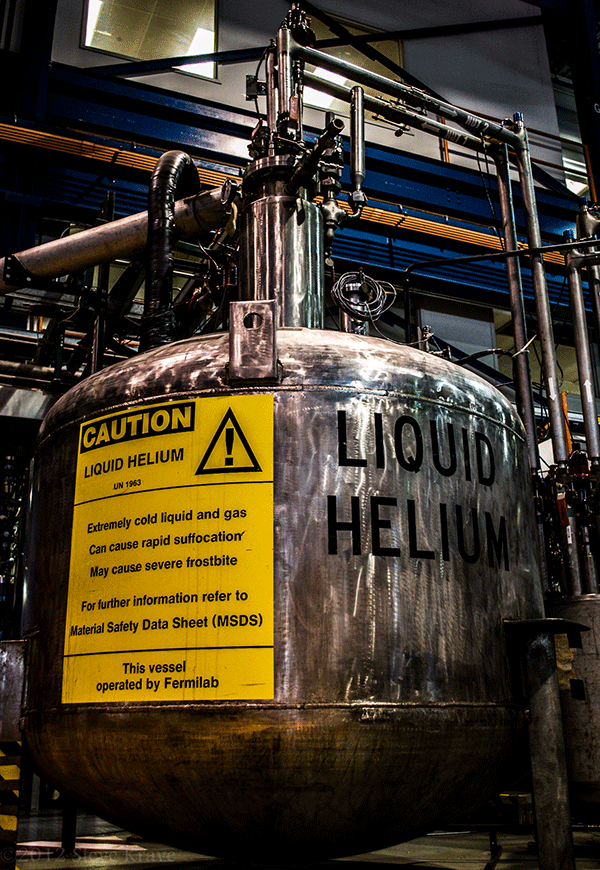

Without liquid helium, scientists couldn’t cool the magnets at particle accelerators, medical researchers would have to shut down their MRI machines, and most known superconductors would never have been discovered. But per-liter costs of the cryogen have been creeping up for years, and the problem is only expected to get worse as the largest domestic supplier of helium, the Bureau of Land Management, eventually sells off its reserve. Academics running bench-top experiments have been particularly hard hit because compared to industry they buy volumes too small to obtain a good price from helium vendors.
A pilot program jointly run by the American Physical Society (the publisher of Physics) and the American Chemical Society will work on scientists’ behalf to negotiate a lower price for liquid helium. The idea is to form a collective of 10–15 research groups with varying helium needs and from different parts of the US. APS and ACS will then work with the Defense Logistics Agency, which provides logistics and technical service for the military, to broker a one-year contract with vendors. Any researcher with an active US federal grant is invited to apply. (More information can be found on the program’s website and in this article in APS News by staff writer Michael Lucibella.)
Mark Elsesser, a policy analyst at the APS who will serve as the liaison with the DLA, says that because the program is in an experimental phase, it’s seeking a variety of participants. “We’ll consider everyone, from researchers at large user facilities that go through several dewars of liquid helium a day to an individual at a university in Montana who may only be ordering a few times a month.” He also stressed the test program isn’t limited to scientists in one region of the US. “We want researchers from the West Coast, East Coast, Southwest, and Midwest,” he says.
Prices can vary substantially for researchers at different universities or labs, with some paying $7 a liter (a cheap bottle of wine) for a 100-liter dewar and others as much as $15 to $30 a liter (a respectable Bordeaux), costs that can eat up a large fraction of a research grant. Reliability is also a problem. Elsesser says many scientists struggle with delays or failed deliveries and too much paperwork. The hope is that with a heavyweight customer like the DLA involved, researchers would receive better service overall.
The program is open to applicants until September 12, 2014. APS and ACS will decide on the final group of participants by October of 2014, with deliveries expected as early as May of 2015.
Researchers interested in applying to participate in the program should contact Mark Elsesser, elsesser@aps.org.